




















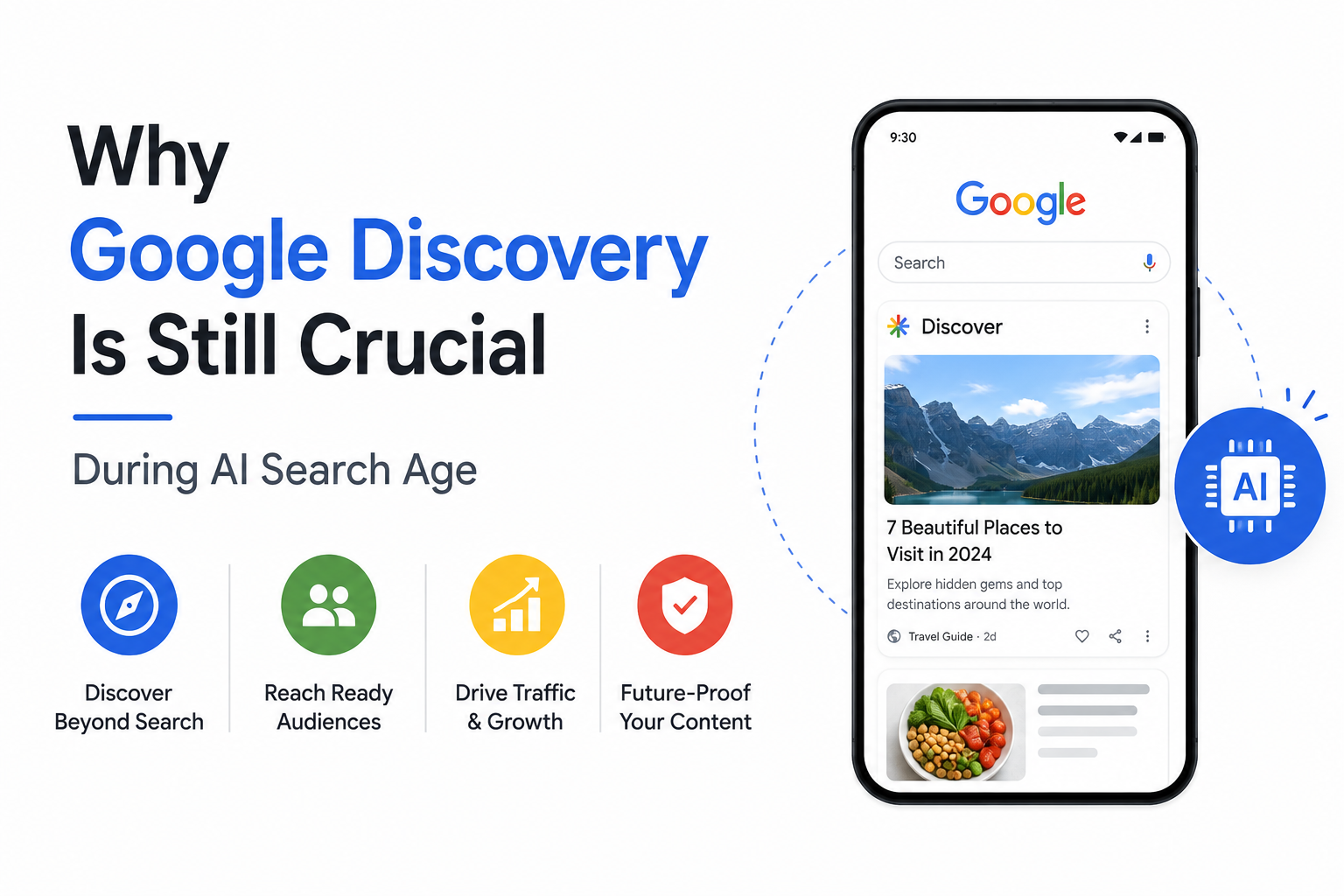
The emergence of AI is affecting the way people use Google Search. Still, despite all the progress in the search area, one of the essential aspects of search optimization remains unaltered. Google needs to discover and index a page before that page becomes a part of the search system.
That nuance is becoming increasingly important due to the growing interest in AI Overviews, AI Mode, conversational queries, and generative answers. People tend to pay more attention to the appearance of content in the search results. However, webmasters need to keep in mind that the process starts well before that stage.
Current recommendations of Google demonstrate that point. Pages used as supporting links in Google generative AI experiences should be indexed and have the ability to appear in Search. Google also claims that established SEO fundamentals remain relevant to these experiences.
AI Search Has Altered the Experience but Not the Initial Step
Traditionally, search made users enter a short query and select one of the possible options among the results. An AI-driven search algorithm allows handling longer queries, follow-up queries, comparisons, and more complicated information needs.
That change makes a huge difference in the user experience. Still, the information provided by AI systems depends on the ability to access and understand the content.
According to Google, Search passes through three general stages. They include crawling, indexing, and showing relevant results to the user. As a part of the crawling stage, the system discovers and accesses pages, while the next step allows analyzing and storing information about them. Only after these stages, a page becomes eligible to be shown for a relevant search query.
Thus, the interface can be developed much faster than the necessity to discover web content.
Publishing a Page Is Not Equivalent to Its Discovery
One of the main assumptions about SEO is the fact that publishing makes a page available to Google.
Nevertheless, there is no central directory with all web pages. Google constantly discovers new or updated URLs as its crawlers explore the web. Even compliance with technical requirements of Google cannot ensure that the page would be discovered, indexed, and shown in the results.
That nuance creates an important difference between creation and promotion of content.
Sitemaps can be used to communicate with Google about new or updated URLs, while a crawlable site structure enables crawlers to navigate pages of the site. Google recommends making it easier for crawlers to find important content through internal linking. That recommendation includes sites striving to get visibility in the AI search experience.
An article located deeply inside a site and lacking connections with other pages presents a completely different discovery environment compared to the article naturally incorporated into the structure of the site.
Links Enable Navigating Across the Web
Internal links allow navigating between the pages of one domain, but the web stretches far beyond the boundaries of any website.
Once another website includes a link towards a page, a connection is created between two separate locations on the web. That nuance can be explained by the understanding of the essence of backlinks. In addition to the commonly known SEO term, backlink is a link from one website to another website.
That connection creates an additional path for users and crawlers to encounter content.
Still, it does not guarantee indexing or ranking of the page. Google explicitly avoids making such promises, and discovery cannot be considered as the ranking performance. Instead, links should be perceived as a part of the structure of the interconnected pages.
That distinction becomes especially useful for evaluating new content. It is possible for a page to be technically available but to lack clear paths to it.
Discovery and Ranking Are Two Different Things
SEO discussion is often focused on rankings, but discovery and ranking solve different issues.
Discovery asks whether Google finds the URL. Crawling involves the ability of Googlebot to access and fetch content. Indexing involves the processing of this content for the purpose of inclusion in the index. The next step is ranking when the system identifies relevant information according to the query.
A website can have a discovery problem before ranking problems occur.
Some of the technical barriers are examples of that problem. Rules in robots.txt can prevent crawling, server issues can limit access, and some indexing directives can prevent pages from being included. Duplicate URLs and the poor structure of the site can cause additional difficulties.
These fundamentals remain relevant to any search experience. It can be traditional results, AI generated answers, or some other type of search.
AI Makes Technical Accessibility Even More Important Than Before
The ability of AI to synthesize answers can give an impression that SEO becomes less technical since people interact with synthetic answers instead of the list of pages.
However, Google documentation shows the opposite trend.
Google’s documentation on generative AI search emphasizes the need to maintain the technical structure of the site, to enable crawling and access to content, and to continue following the established SEO practices. Google’s generative AI features use information from its Search index. Thus, content should be first included in the search system to become visible in the AI experience.
Google also introduced a special generative AI performance reporting tool in Search Console in June 2026, which gives some website owners an opportunity to see how their pages perform in AI features like AI Overviews and AI Mode. This development proves that generative experiences become measurable parts of Search and not separate systems anymore.
Thus, the importance of fundamental accessibility cannot be overlooked by publishers.
Good Discovery Begins with Structured Website
Website owners cannot control each visit of Google to the URLs. They also cannot control whether a page would be indexed. Nevertheless, they can influence the presence of clear paths to important content.
It means avoidance of isolated pages, maintenance of logical internal navigation, making important URLs crawlable, usage of sitemaps if needed, and logical integration of important pages with the rest of the site.
External connections can be added to this structure if other websites have legitimate reasons to mention the content.
None of these strategies is something new. What has changed is the environment.
AI is transforming the way information is delivered to users, the way people formulate their queries, and the sources of information appearing during the search. However, before content becomes competitive in such environments, the search system should have access to it.
The future of Google Search may look increasingly different from the familiar results page. However, discovery remains one of its foundations. For website owners facing the AI search era, the understanding of the discovery process can become as important as the understanding of the ranking one.